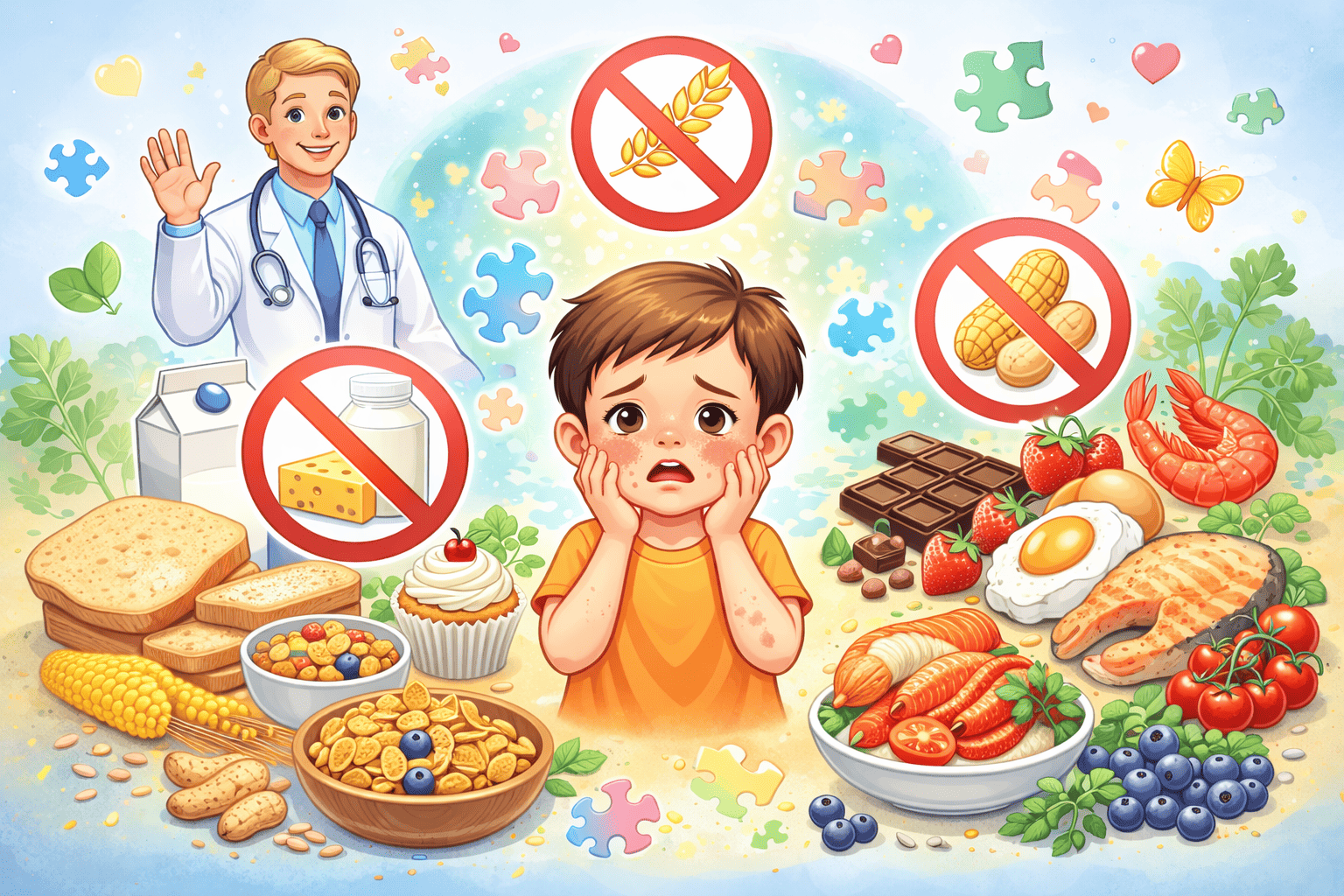
Hidden food intolerance in children with ASD and speech and developmental delays
For patients with autism spectrum disorders, timely identification of food intolerance to certain products is an extremely important stage of therapy, which helps reduce systemic inflammation and significantly improve behavior. Very often, parents and even some specialists confuse different types of bodily reactions to food, treating them as the same condition, which inevitably leads to incorrect dietary therapy choices. In this article, we will clearly and in detail explain the fundamental medical difference between immune and enzymatic responses, and also examine how specialized clinical nutrition products help safely compensate for nutrient deficiencies during strict elimination diets.
Food intolerance and allergy: fundamental differences
From a medical perspective, these are two completely different pathological processes with distinct origins. Allergy is an acute, inappropriate, and immediate immune system reaction (IgE antibody production) to a specific protein, accompanied by a massive release of histamine. In contrast, sensitivity (intolerance) is related exclusively to the digestive system. In the absence of allergy, food intolerance requires a completely different treatment and recovery approach, as it occurs due to a simple lack of specific enzymes needed to break down food or due to increased intestinal permeability. This condition has a long cumulative effect and does not pose an immediate life threat, but continuously intoxicates the child’s body with undigested peptides. That is why at VIVERE Clinic, the comprehensive diagnostic workup for children with ASD and neurodevelopmental delays includes all necessary laboratory tests, abdominal ultrasound, and consultation with a pediatric gastroenterologist.
Classic manifestations of food intolerance and allergy
Main differences in bodily reactions:
- in allergy, there is immediate swelling of the oral and throat mucous membranes, wheezing breathing, acute urticaria, sudden vomiting, and a real risk of anaphylactic shock requiring emergency medical care;
- in intolerance, there is severe abdominal bloating, chronic prolonged constipation or exhausting diarrhea, flatulence, and general stomach discomfort without immediate life threat;
- in intolerance, undigested food particles entering the bloodstream through an inflamed intestine act on the brain similarly to opiates, directly triggering brain fog, hyperactivity, sudden aggression, and a significant increase in stereotypical movements (stimming).
Symptoms of food allergy usually appear within the first minutes (up to two hours maximum) after consuming a harmful product. In contrast, enzyme deficiency in children with autism manifests with a delay, sometimes several days later. To act correctly in critical situations, parents must clearly distinguish the symptoms of both conditions.
What does food allergy look like in children?
Visual assessment of a child’s physical condition is crucial even before complex laboratory testing. Intolerance, however, has less obvious external signs: the child may appear excessively pale, have deep dark circles under the eyes (so-called “allergic shiners”), constantly touch or press the abdomen, or lie on the floor due to hidden spasms. If you need to know what food allergy looks like in children, it is primarily bright red patches all over the body, severe unbearable itching, eczema-like weeping rashes, and noticeable swelling of the face or eyelids.
Strict diet for food allergy
After an accurate diagnosis is established by a pediatric gastroenterologist or allergist, the most important stage of therapy begins — correction of the daily diet. A therapeutic diet for food allergy involves complete, most often lifelong exclusion of the allergen even in microscopic amounts. In cases of enzyme deficiency, elimination is also necessary, but its main goal is to give the damaged gastrointestinal mucosa time to heal and reduce chronic neuroinflammation. During such a drastic dietary change, many high-calorie foods are removed from the child’s menu, creating a serious risk of protein-energy malnutrition.
Gluten intolerance and Nutridrink Protein
One of the most common issues in autism spectrum disorders is gluten intolerance — a complex plant protein found in wheat, rye, and barley. This is a classic sensitivity rather than an immune reaction, but it can severely affect the nervous system. Removing baked goods from the diet often leaves children with selective appetite undernourished. To safely compensate for nutrient deficiencies, specialists recommend introducing Nutridrink Protein into the diet. This nutrition product is completely gluten-free and does not provoke inflammation while providing essential energy.
Beneficial properties of Nutricia Nutridrink Protein
Thanks to its high nutritional density, just one small bottle (125 ml) contains a powerful dose of protein, essential amino acids, and micronutrients. Its pleasant texture is well suited for children with sensory aversion to solid foods. The high-quality Nutricia Nutridrink Protein formula is designed specifically for patients who critically require increased protein intake but cannot obtain it from regular food. The use of medically approved nutritional formulas significantly reduces parental anxiety regarding the adequacy of the child’s diet.
Casein, lactose, and plant-based Nutricia Nutridrink
The second most common trigger for children on the spectrum is cow’s milk. This may include both true immune allergy to casein protein and simple enzyme deficiency of lactase, leading to painful bloating. If a child is diagnosed with dairy intolerance, an ideal solution is plant-based Nutricia Nutridrink, made without any animal milk. This innovative plant-based drink provides the body with proper protein while completely eliminating the risk of intestinal irritation.
Daily benefits of the drink
Successful and effective diet therapy is impossible without a proper balance of macro- and micronutrients in every meal. By regularly using Nutridrink Protein as a full supplement to breakfast or dinner, you reliably protect the child from physical exhaustion during the elimination diet. It is important to remember that such highly concentrated medical formulas should be consumed slowly, in small sips over 20 minutes, so that the enzymatic system can properly absorb them. This creates a strong foundation for successful and comfortable rehabilitation of the child.
Sources:
1. The American Academy of Allergy, Asthma & Immunology (AAAAI). Official medical guidelines on the differences between food allergy (IgE-mediated) and food intolerance. URL: https://www.aaaai.org/tools-for-the-public/conditions-library/allergies/food-intolerance
2. National Library of Medicine (PubMed). Scientific review "Food Allergy and Intolerance in Children with Autism Spectrum Disorder" on the effects of undigested peptides on the nervous system. URL: https://pubmed.ncbi.nlm.nih.gov/29336528/
3. Nutricia Medical Nutrition Global. Official specification of Nutridrink Protein and Plant-Based product line for patients with gluten, lactose, and cow’s milk protein intolerance.