Transition to a Gluten-Free Diet in Children with ASD and Autism
In modern comprehensive therapy for autism spectrum disorders, a properly organized gluten-free diet plays an extremely important role, helping to reduce neuroinflammation, normalize digestive system function, and support a child’s weakened body with the help of specialized clinical nutrition products. Recent scientific studies convincingly demonstrate a close relationship between the state of the gut microbiota and the functioning of the central nervous system. That is why eliminating certain complex proteins from the daily diet often becomes the first and most effective step toward significant improvements in behavior, increased concentration, and reduced anxiety levels in children with neurodevelopmental differences.
What Are the Benefits of a Gluten-Free Diet for Children?
The digestive system of patients with autism spectrum disorders is often unable to fully break down complex proteins found in grains. A gluten-free diet for children is aimed at eliminating gluten from the diet, which, in conditions of increased intestinal permeability (the so-called “leaky gut” syndrome), can enter the bloodstream in the form of partially digested peptides. These substances, known as gluteomorphins, are able to cross the blood-brain barrier and bind to opioid receptors in the brain. This process often triggers hyperactivity, self-aggression, sleep disturbances, and delayed speech development, which is why strict adherence to an elimination diet helps minimize this toxic effect.
Gluten-Free Diet: What Should Be Avoided?
The success of therapy depends on the complete absence of gluten, even in microscopic amounts. Parents need to be extremely attentive to hidden gluten, which is often used as an inexpensive thickener in store-bought sauces, ketchup, processed meats, ready-made meat products, baking powders, and even in the coatings of certain medications or vitamin complexes. But the key question is — what should never be eaten on a gluten-free diet? The list of prohibited foods includes:
- all types of wheat (including semolina, couscous, bulgur, spelt, and freekeh);
- rye and barley (including pearl barley and barley groats);
- regular pasta, bread, bagels, and any baked goods;
- industrial sauces (mayonnaise, ketchup) where flour is used as a thickener;
- processed meats, sausages, and meat semi-finished products with added breadcrumbs or stabilizers.
Even a small amount of a prohibited ingredient can trigger an immune response, so it is important to ensure complete avoidance of cross-contamination (use separate cutting boards and utensils).
Gluten-Free Diet: What Can Be Eaten
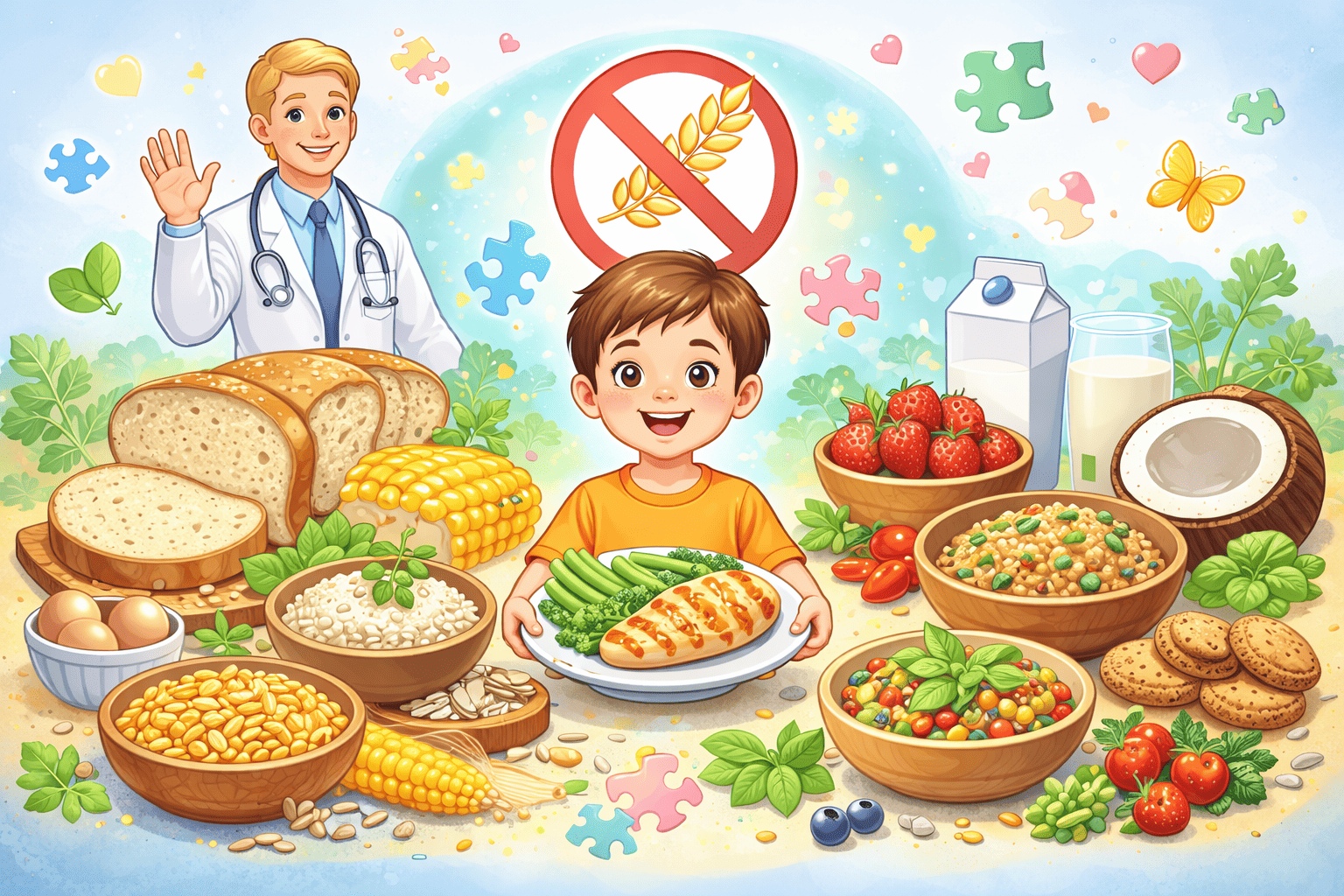
Despite serious restrictions, a child’s basic diet should remain nutrient-dense and tasty. The menu should be based on high-quality animal proteins (poultry, rabbit, lean beef, sea fish), chicken and quail eggs, as well as a large amount of fresh, baked, and stewed vegetables. When considering what can be eaten on a gluten-free diet, permitted sources of complex carbohydrates include rice, buckwheat, millet, quinoa, amaranth, and corn. It is important to purchase grains only from certified manufacturers whose packaging carries the international crossed-grain symbol, which guarantees the absence of cross-contamination with wheat dust during production.
Gluten-Free Diet: Weekly Menu
To avoid nutrient deficiencies and food-related stress, the transition to a new dietary pattern should be well planned. For example, breakfast may consist of buckwheat pancakes made with water or plant-based milk and berry puree. Lunch can include a light cream soup made from zucchini and broccoli with boiled turkey fillet. Dinner can be composed of steamed fish patties with a quinoa side dish. A carefully planned weekly gluten-free menu, tailored to the child’s individual taste preferences, significantly simplifies life for the whole family. The variety of permitted foods makes it possible to create complete meals that a child will enjoy eating.
Supporting the Body with Nutridrink Protein
Children with autism often experience selective eating, and the sudden removal of familiar bakery products may lead to temporary food refusal and weight loss. In such critical situations, medical nutrition products such as Nutridrink Protein can help. It allows for rapid compensation of essential macronutrient deficiencies. This is a specialized, ready-to-drink, high-protein and high-calorie beverage containing an optimally balanced complex of all essential amino acids to support muscle mass and proper immune system function during adaptation to a new diet.
Benefits of Nutridrink Protein for a Child
One small 125 ml bottle contains a high amount of energy, complete protein, as well as a full range of vitamins and trace elements in an easily digestible form, making it an ideal addition to strict therapeutic protocols. It has been clinically proven that Nutricia Nutridrink Protein is completely safe for patients with celiac disease and gluten intolerance, as it is guaranteed to contain no traces of gluten. European quality standards make this product one of the most recommended in pediatric gastroenterology and neurology.
How to Use This Drink Correctly?
To achieve maximum therapeutic effect, specialized formulas require proper use. The drink tastes best when slightly chilled. Doctors recommend consuming Nutridrink Protein in small sips through a straw over 20–30 minutes between main meals to avoid overloading the digestive system. If necessary, especially if a child has strong sensory sensitivity to new tastes, this product can be discreetly added to permitted gluten-free porridges, homemade fruit smoothies, or safe desserts, thereby enriching the child’s daily diet with high-quality nutrients without stress.
Sources:
1. National Institute of Diabetes and Digestive and Kidney Diseases (NIDDK, USA). Recommendations on medical nutrition, safe foods, and hidden sources of gluten. URL: https://www.niddk.nih.gov/health-information/digestive-diseases/celiac-disease/eating-diet-nutrition
2. U.S. National Library of Medicine (PubMed). Study: "The Gluten-Free/Casein-Free Diet: A Double-Blind Challenge Trial in Children with Autism" (Impact of a gluten-free diet on behavioral and physiological outcomes in ASD). URL: https://pubmed.ncbi.nlm.nih.gov/26343026/
3. Official Nutricia website (global medical portal). Clinical characteristics, composition, and usage instructions for Nutridrink Protein (also known in some markets as Fortisip Compact Protein). URL: https://www.nutricia.co.uk/patients-carers/pim-products/fortisip-compact-protein.html