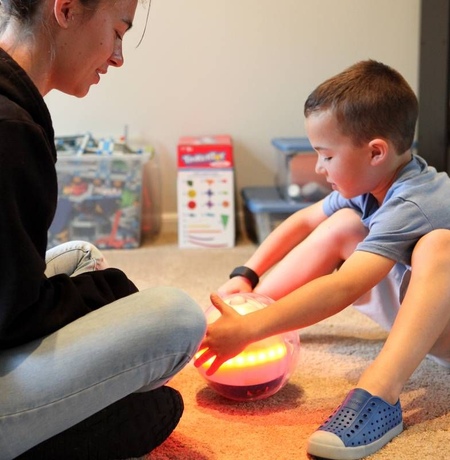
Hyperactivity syndrome in children, as a rule, can be suspected at the age of 4-5 years. It can be caused by various factors - behavioral, biochemical, physiological, sensorimotor. Often attention deficit hyperactivity disorder (ADHD) is an independent disorder, but it can also be one of the manifestations of autistic disorder. Let us consider the features of this condition in ASD, as well as the characteristic differences from hyperactivity, which develops as an independent syndrome.
Characteristic differences between hyperactivity in ASD and ADHD
Both ADHD and autism spectrum disorder are accompanied by attention-focusing problems, impulsivity, learning, and communication difficulties. However, they are different disorders:
- ASD is a complex of related developmental disorders that can impact speech, communication abilities, and behavior.
- Hyperactivity is a condition that affects a child's ability to concentrate, to remain still when doing something or to think before making a decision and acting.
Both diseases can be successfully corrected. However, it is important to consult a doctor in time and correctly diagnose the disease, after which treatment methods should be selected.
Distinctive behavioral signs of hyperactivity in autism
Hyperactivity in autism spectrum disorders can be easily distinguished by the fact that it is easy for a child to concentrate on activities that he or she enjoys and difficult to concentrate on activities that he or she dislikes. For example, a child with ASD can spend hours putting puzzles together but cannot concentrate on reading.
With ADHD, a child tends to avoid any activity that requires focus and concentration.
Differences in communication and daily life in ADHD and ASD with hyperactivity
All children, including healthy children, may have difficulty communicating and connecting with others. However, children with autism spectrum disorder have more difficulty expressing their emotions and feelings. They are less socially aware and have difficulty making eye contact. However, they can talk for long periods of time about things they like.
Children with ASD do not like changes in daily routines, food. They may be tied to one toy, clothes.
Children with hyperactivity can talk continuously, as a rule, often interrupt the interlocutor. At the same time, they do not like to repeat the same actions, adhere to a schedule, keep order and other routines.
Causes of hyperactivity in ASD
Hyperactivity syndrome is a frequent companion of autism spectrum disorders. Brain damage is present in children with ASD. HDFC-induced encephalopathy, which is not associated with an autoimmune or infectious reaction, is formed. It is caused by multiple epigenetic, biochemical, and immune-related abnormalities.
Signs of autism spectrum disorder with hyperactivity
Clinically, GDFC-induced encephalopathy is accompanied by other manifestations besides hyperactivity syndrome:
- movement disorders;
- eating disorder;
- cognitive disorders (problems with memory, attention);
- sleep disturbances;
- hyperkinesia.
At the same time, the severity of characteristic symptoms of ASD and hyperactivity syndrome may be different.
Clinically, a child may be diagnosed with ASD with ADHD manifestations or, on the contrary, suffer from ADHD and autism manifestations in the form of impaired social interaction, perception of clothing textures, impulsivity, and so on. Only a doctor can accurately diagnose the problem and its severity, and then choose the correct therapy. For initial diagnosis, parents can contact a pediatrician or child psychiatrist who deals with such problems.
How is ASD with hyperactivity treated?
Considering the disease from the point of view of the concept of HDFC-induced encephalopathy, it was possible to radically change the approach to treatment. Psychotropic treatment, which was previously used for such a problem, is replaced by neuroprotective approaches and immunotherapy. They are aimed at protecting the brain from damage and allow blocking the mechanism of the appearance of pathological changes.
If your child has already been diagnosed with ASD or if you notice even minor manifestations of ASD, contact Vivere Clinic. We have a team of experienced doctors who are guided by modern concepts and use the latest high-precision methods of diagnosis and treatment of autistic hyperactivity disorder.
Our specialists work closely together to provide a comprehensive solution to the problem. Efforts are focused on identifying and eliminating the cause of the disturbance to achieve a sustainable effect.
You can make an appointment for a consultation at Vivere Clinic by phone or through the form on our website at a time that is convenient for you.