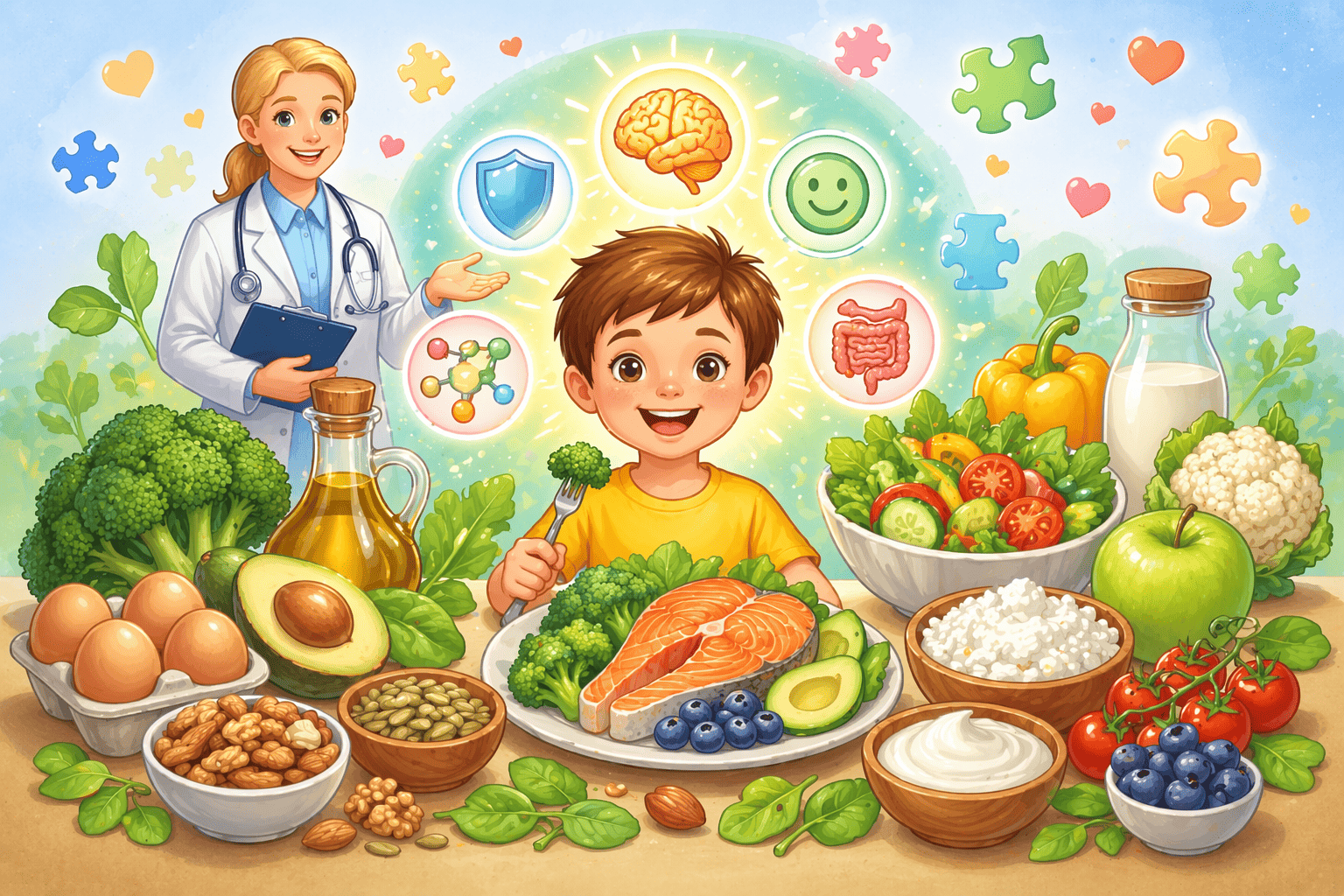
Modern Diet Therapy for Autism: First Steps
For many families facing autism spectrum disorders, properly selected diet therapy becomes a reliable foundation for reducing neuroinflammation and improving a child’s overall cognitive development. Recent scientific research in the field of gastroenterology convincingly demonstrates a strong physiological connection between the state of gut microbiota and the functioning of the central nervous system. In patients with neurodevelopmental conditions, increased intestinal permeability is very often observed, allowing undigested protein peptides to enter the bloodstream directly. That is why targeted and well-planned dietary correction is not just a preference, but a powerful medical tool that helps reduce intoxication, stabilize emotional state, and improve learning ability.
Proper Nutrition in Children with Neurodevelopmental Delays and ASD
Gastroenterologists most often recommend gradually eliminating the following groups of foods from the daily diet:
- products containing gluten (wheat, traditional rye, barley);
- foods with poorly digestible casein (cow’s milk, hard cheese);
- store-bought sweets with artificial colorings, flavor enhancers, and preservatives.
When specialists develop a specific diet for autism, the main goal is the safe elimination of food triggers that may negatively affect the central nervous system. When replacing these ingredients with hypoallergenic alternatives, it is important to remember that sudden changes in habits can cause significant stress for a child, so new healthy foods should be introduced as carefully and gradually as possible.
Overcoming Selective Eating in Children
One of the most difficult obstacles on the path to physical recovery is pronounced sensory sensitivity to new textures, smells, or even colors on the plate. The majority of children on the spectrum experience food neophobia, agreeing to eat only a very limited set of familiar foods (for example, only plain pasta or only wheat bread). Transitioning to a new lifestyle requires exceptional patience from parents: unfamiliar healthy ingredients must be introduced in micro portions, carefully masking them within favorite foods. It is critically important not to force the child, to create a positive psychological atmosphere at the table, and to keep a food diary to track any reactions.
Balanced Sample Menu for Autism
To avoid serious macronutrient deficiencies after removing familiar foods, families should plan shopping in advance and prepare meals according to a clear schedule. For quick snacks, rice cakes with homemade chicken pâté or ripe seasonal berries are excellent options. A sample one-day menu for autism may look like this. Breakfast: tender millet porridge with natural almond milk, baked apple, and a drop of olive oil. Lunch: thick vegetable cream soup made from broccoli and zucchini, complemented with steamed rabbit meatballs. Dinner: white sea fish fillet baked in foil with a side of boiled quinoa.
Gut Support with Nutricia Fortini
During prolonged dietary restrictions and the elimination of traditional grains, a child’s body systematically lacks essential fiber, which quickly leads to painful chronic constipation and toxin buildup. In such cases, gastroenterologists prescribe a specialized clinical formula Nutricia Fortini Multi Fibre, specially designed for complete enteral nutritional support. This ready-to-use medical drink contains a unique patented combination of six different types of prebiotic dietary fibers. They not only gently stimulate natural peristalsis but also serve as an ideal nutrient medium for the growth of beneficial bifidobacteria.
Restoring a Child’s Body Weight
Very often, due to stress and refusal of diet therapy, children with ASD rapidly lose weight and show noticeable delays in physical development. Liquid high-calorie formulas become a real medical solution, as a small standard bottle (200 ml) contains a large amount of easily digestible protein, healthy lipids, and antioxidants. This allows parents to reliably meet all basic daily nutritional needs even during crisis days when the child is in an emotional breakdown and completely refuses any solid food.
Innovative Fortini Powder Base
For the most demanding and sensitive children who strongly reject new beverages due to their packaging format or texture, scientists have developed an alternative solution. It gives adults a unique opportunity to discreetly add therapeutic powder to already familiar and safe meals. The high-energy dry formula Fortini Powder is completely neutral: it comes as a powder without any pronounced taste or specific smell. It can be easily mixed into warm gluten-free pancakes, thick fruit puree, or homemade vegetable soup, significantly increasing their nutritional value without changing their appearance.
Why Do Specialists Choose Nutricia Fortini?
Absolute safety and clinically proven effectiveness are the key criteria of modern medicine when choosing specialized nutrition for patients with neurodevelopmental disorders. Pediatricians and parents receive a guarantee of complete absence of gluten and hidden lactose when choosing the premium European Nutricia Fortini line. Strict adherence to pharmaceutical quality standards during production eliminates even the slightest risk of cross-contamination with allergens. Such reliable support gives families confidence, as proper diet therapy for autism — is a long-term journey that requires safe and high-quality nutritional support for the child’s body.
Sources:
1. Autism Speaks (USA). A comprehensive guide to gastrointestinal disorders, nutrition issues, and dietary intervention strategies in ASD. URL: https://www.autismspeaks.org/autism-nutrition.
2. ESPGHAN (European Society for Paediatric Gastroenterology, Hepatology and Nutrition). Official clinical guidelines for managing pediatric patients with nutritional deficiencies and food neophobia. URL: https://www.espghan.org.
3. National Library of Medicine (PubMed). Large-scale clinical study "Nutritional and Dietary Interventions for Autism Spectrum Disorder" on the impact of gluten-free and casein-free diets on cognitive function. URL: https://pubmed.ncbi.nlm.nih.gov/30704478/.
4. Nutricia Medical Nutrition (Global). Detailed technical specifications, composition, and indications for the use of Fortini Multi Fibre and Fortini Powder.
5. Autism Research Institute. Database on the gut-brain axis and the impact of prebiotic fibers on the microbiome in autism. URL: https://autism.org/gastrointestinal-issues-autism/.