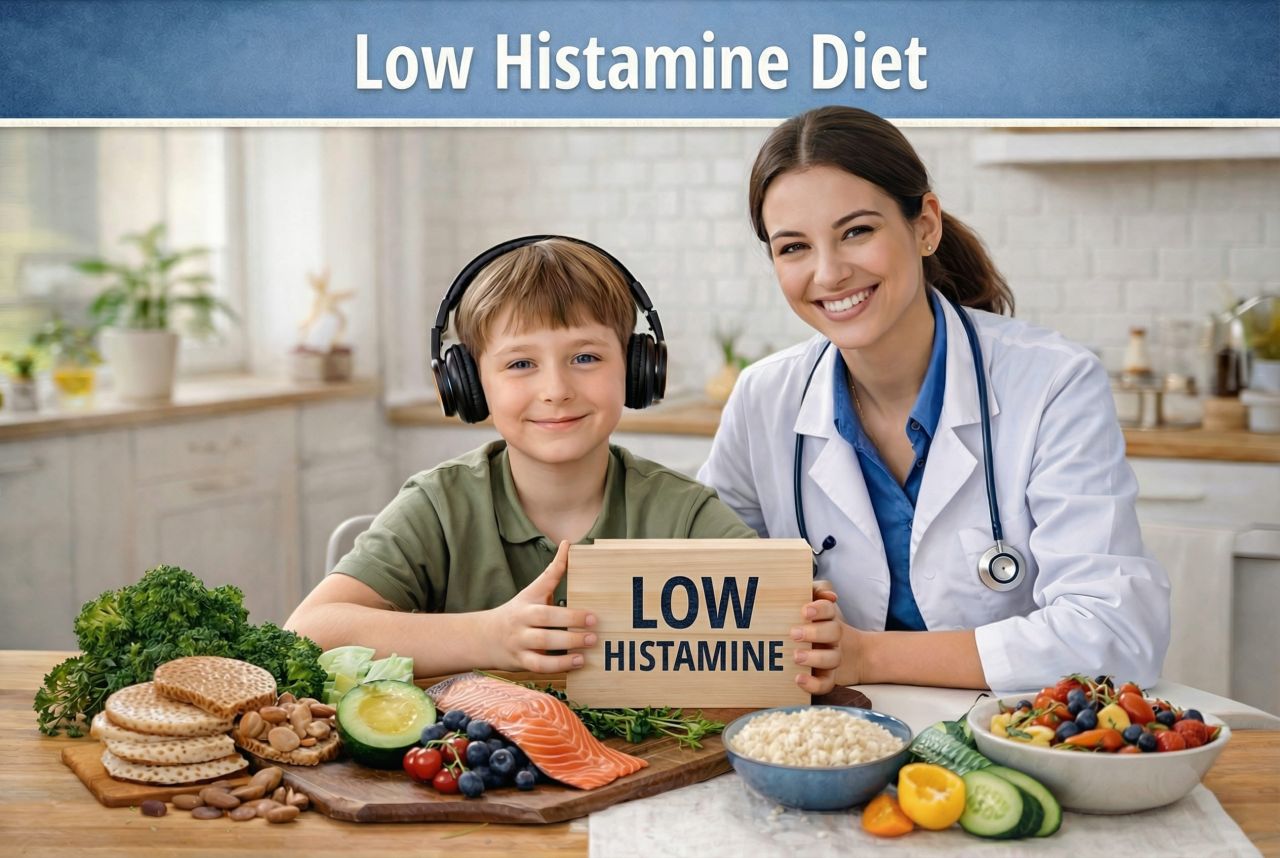
Low-histamine diet — is a specialized dietary approach used to reduce symptoms associated with excessive activation of the histamine system in the body.
In clinical practice, it may be beneficial for children and adults with neuroimmune and neuroinflammatory conditions.
This is why such a diet is used as part of a comprehensive approach in:
- autism spectrum disorders (ASD);
- speech or psychomotor developmental delays;
- PANS/PANDAS/PITANDS syndrome;
- chronic fatigue syndrome;
- increased anxiety;
- sleep disturbances;
- chronic gastrointestinal symptoms;
- suspected histamine intolerance.
What is histamine?
Histamine — is a biologically active substance that performs important functions:
- participates in immune system function;
- regulates inflammatory responses;
- affects the nervous system;
- regulates stomach acidity;
- influences sleep, behavior, and cognitive functions.
Under normal conditions, histamine is rapidly broken down by enzymes, the main one being DAO (diamine oxidase). That is why we use this indicator as one of the diagnostic criteria.
If too much histamine is produced or enzyme systems function insufficiently effectively, it can accumulate in the body and cause a variety of symptoms.
Why might this be important for children with ASD and PANS/PANDAS/PITANDS?
Some children with neuroimmune conditions may experience:
- increased immune system activation;
- inflammatory processes;
- gut microbiota imbalance;
- increased mast cell activation.
This can lead to excessive histamine release.
Excess histamine can affect not only allergic reactions but also the functioning of the nervous system.
In some children, this may manifest as:
- increased anxiety;
- emotional instability;
- sleep disturbances;
- hyperactivity;
- increased stereotyped behaviors;
- headaches;
- abdominal pain;
- skin redness or rashes.
In children with PANS/PANDAS/PITANDS, additional strain on the immune system may worsen the course of neuroinflammatory processes. That is why temporarily limiting histamine in the diet can sometimes help reduce the overall inflammatory burden.
Key principles of a low-histamine diet
The main idea of this diet is to reduce the intake of histamine from food and foods that stimulate its release.
It is important to consider that histamine accumulates in foods during:
- fermentation;
- prolonged storage;
- aging;
- reheating.
Therefore, food freshness is of great importance.
Foods high in histamine (usually restricted)
Foods that often contain high levels of histamine or stimulate its release include:
- Fermented foods: sauerkraut, fermented vegetables, soy sauce, kombucha, pickled foods, tofu, natto, etc.
- Aged cheeses: cheddar, Roquefort, blue cheeses.
- Processed meats: sausages, ham, salami, bacon.
- Fish (especially not very fresh): tuna, mackerel, sardines, anchovies.
- Other foods: tomatoes, eggplant, spinach, avocado, chocolate, vinegar, canned foods, long-cooked broths, preserves, processed foods, dried meats, all dried fruits, cashews and walnuts, alcohol (beer, champagne, wine).
Foods that may stimulate histamine release
Some foods contain little histamine themselves but may stimulate its release: citrus fruits, strawberries, bananas, cocoa, nuts, food additives, and colorings.
Foods that are usually well tolerated
On a low-histamine diet, the following are typically allowed:
- Protein foods: fresh meat (chicken, turkey, beef; excluding pork), fresh fish, eggs (if well tolerated).
- Vegetables: broccoli, zucchini, cucumbers, carrots, pumpkin, cauliflower.
- Fruits: apples, pears, blueberries.
- Grains: rice, buckwheat, quinoa, millet.
- Fats: ghee, olive oil, pumpkin seed oil, flaxseed oil.
- Seeds, nuts: chia, hemp, pecans, pistachios, pine nuts.
Important principles when following the diet
For the diet to be effective, it is important to:
- use the freshest possible foods;
- avoid prolonged storage of prepared meals;
- avoid reheating;
- limit fermented foods;
- keep a food diary.
Is it necessary to follow this diet permanently?
In most cases, a low-histamine diet is used temporarily — as a diagnostic or therapeutic tool.
It is usually followed for 3–6 weeks, after which foods are gradually reintroduced to assess individual reactions.
We consider it part of an individualized neuroimmunological approach, which may include:
- working with the gut microbiota;
- reducing inflammation;
- treating infectious triggers;
- supporting mitochondrial function;
- normalizing immune system function.
A comprehensive approach is what allows us to achieve the best outcomes in correction and treatment for our patients.